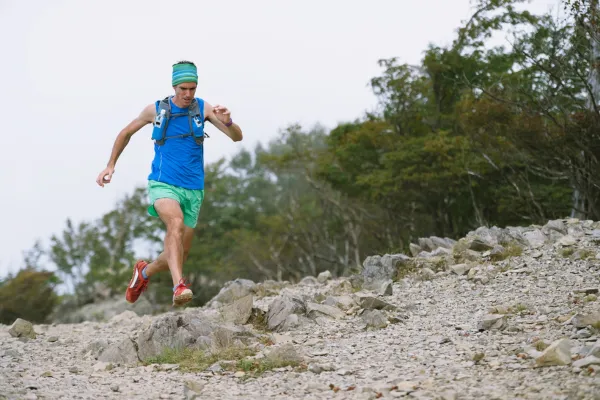
Trail Running and Abdomen Balls™ - Core Stability for Technical Terrain
Trail running occupies a unique space in the endurance sports world. It's running, but it's also navigation, balance training, strength work, and nature therapy simultaneously. The technical demands of off-road terrain require a different physical toolkit than road running—and core stability sits at the heart of that toolkit.
On a paved road, your running surface is predictable. Every footfall lands on a flat, consistent, reliable surface. Your core must stabilize against the rhythmic, predictable forces of forward locomotion, which is challenging but regular.
On a trail, nothing is predictable. Rocks require rapid balance adjustment mid-stride. Tree roots demand sudden changes in foot placement. Cambered surfaces create lateral forces your core must resist. Descents challenge deceleration stability. Climbs demand entirely different core engagement patterns. Mud, loose gravel, and wet surfaces introduce unpredictable slip forces that your core must manage in real time.
This chaos is what makes trail running extraordinary—and what makes exceptional core strength essential for trail runners.
Why Trail Running Demands Superior Core Strength
The fundamental difference between trail and road running core demands is reactive stability. Road running requires sustained, rhythmic core stability. Trail running requires all of that, plus explosive reactive stability that responds to unpredictable terrain in milliseconds.
When your foot lands unexpectedly on a tilted rock, your core must instantly recalibrate your center of mass. This correction happens faster than conscious thought—it's reflexive, automatic, and entirely dependent on how well-trained your core stabilizers are.
If those stabilizers are strong and responsive, you make the adjustment seamlessly and continue running. The ankle rolls slightly, your core catches you, and you're already thinking about the next step.
If those stabilizers are weak or slow to respond, you can't make the correction in time. The momentum of running carries you past the point of recovery. The ankle rolls significantly, the knee twists, you fall. Trail running injuries—ankle sprains, knee twists, falls with their attendant lacerations and fractures—most commonly originate in this failure of reactive core stability.
The Three Core Demands of Trail Running
Lateral stability is the first and perhaps most critical trail-specific demand. Road runners primarily need sagittal plane stability (resistance to forward-backward forces). Trail runners need robust lateral stability to manage side-to-side forces from cambered trails, lateral foot placements, and balance recoveries.
The obliques and quadratus lumborum are the primary muscles for lateral stability. These muscles work to prevent excessive lateral trunk bend when one side of your body encounters unexpected force. Trail runners who develop strong lateral stabilizers through Abdomen Balls™ training find that their bodies handle lateral challenges automatically, without the fear-inducing moments of instability that plague those with weaker lateral core strength.
Rotational control is the second major demand. Navigating technical terrain requires frequent changes in direction—weaving between obstacles, adjusting around switchbacks, managing the natural path variations of any trail. These directional changes involve rotational forces that your core must manage while you're already managing forward locomotion forces.
Abdomen Balls™ directly trains rotational control through the side-to-side arm movement that engages obliques throughout their full range of motion. This training translates directly to the rotational demands of trail navigation.
Anti-extension stability under fatigue is the third critical demand. Trail runs are typically longer and more metabolically demanding than equivalent road runs. As fatigue accumulates over hours of technical running, core fatigue poses a specific risk: when stabilizers tire, they're less able to respond to terrain challenges, precisely when you're most vulnerable.
Building core endurance—the ability to maintain stabilization over extended periods—requires sustained, endurance-oriented core training. Using Abdomen Balls™ during long training runs develops exactly this endurance capability.
Practical Trail Running Integration
For trail runners, Abdomen Balls™ integrates most effectively into two specific training contexts: warm-up runs on accessible terrain before technical sections, and road or flat trail recovery runs.
Pre-trail warm-up use on flat, accessible terrain activates core stabilizers before you encounter technical challenges. Your obliques, deep stabilizers, and reactive stabilizers are primed and engaged by the time you hit the rocks and roots. This pre-activation can meaningfully reduce injury risk on technical sections.
Recovery run integration provides high-volume core training without adding technical terrain risks. Recovery runs are done on easier terrain at lower intensity. Using Abdomen Balls™ during these runs develops core endurance without the fall risk of using it on demanding trails.
The specific reason to avoid Abdomen Balls™ on highly technical trail terrain is practical: hands carrying the device cannot simultaneously be available for balance assistance. On extremely technical terrain, having hands free provides important safety margin. Reserve Abdomen Balls™ for less technical sections, warm-ups, and separate road or flat-trail runs.
Balance and Proprioception Benefits
Core strength and proprioception—your body's sense of its own position in space—are deeply interconnected. Strong core muscles improve proprioceptive feedback, allowing your body to sense its position and make balance corrections more accurately and quickly.
Trail runners who build core strength through Abdomen Balls™ use often describe a qualitative improvement in how they feel on technical terrain. They're more aware of their body position. They sense imbalance earlier, giving them more time to correct. Their footfalls feel more precise and deliberate.
This enhanced proprioception is not mystical—it's the direct result of training the core muscles that support your proprioceptive system. Better core strength creates better body awareness, which creates better trail running capability.
Descent Confidence
Descending is typically the most technically demanding aspect of trail running, and many runners find it more challenging than climbing despite its lower cardiovascular demand. The high-impact, deceleration forces of downhill running combined with the need for precise foot placement create exceptional core stability demands.
Core strength is the key differentiator between confident and fearful descenders. Runners with strong cores trust their bodies to handle technical downhill terrain. Their stabilizers manage the forces automatically, allowing their conscious attention to focus on route selection and foot placement. Descending becomes exhilarating rather than terrifying.
Runners with weak cores experience the opposite: their bodies feel unstable on descents, generating fear that causes braking and inefficiency. They hold back, lose time on descents, and often get injured because fear-induced poor mechanics create fall scenarios.
Consistent Abdomen Balls™ training builds the core foundation for confident descending. Not immediately—this adaptation takes months of consistent training—but progressively and meaningfully.
Weather and Technical Terrain Interaction
Trail conditions change dramatically with weather, and challenging conditions multiply technical demands. Wet trail surfaces require superior balance. Snow and ice demand extraordinary core stability for every step. Mud creates unpredictable slip potential that only strong reactive stabilizers can manage.
Core strength doesn't just help in ideal conditions—it's your safety margin when conditions deteriorate. The same strong stabilizers that help you navigate dry technical terrain are what keep you upright when that terrain becomes wet, icy, or muddy.
Building this core foundation through year-round Abdomen Balls™ use—during recovery runs and easier training sessions—ensures your stabilizers are ready for whatever conditions you encounter when you're out on the trails.
Conclusion
Trail running is one of the most physically demanding, technically challenging, and deeply rewarding athletic pursuits. Its demands on core stability exceed those of virtually any other endurance activity. Building the specific core strength that trail running requires isn't optional for those who want to run safely and effectively on technical terrain.
Abdomen Balls™ builds that strength efficiently, progressively, and specifically—through running-integrated training that targets the exact stabilizer muscles trail terrain demands. Every recovery run, every warm-up, every easy training day becomes investment in the core strength that will keep you safe and fast on the trails you love.
Build the core strength your trails demand.