The Science of Core Activation During Walking and Running
Exercise science has advanced dramatically in recent decades. The understanding of how muscles work, how strength develops, and what training approaches produce the best functional outcomes has evolved far beyond the sit-up-and-crunch model that dominated fitness culture for generations.
The science of core activation during locomotion—specifically walking and running—reveals something remarkable: these activities, when performed with appropriate resistance, provide comprehensive core training that floor-based exercises simply cannot replicate. Understanding this science helps explain why Abdomen Balls™ is not just a convenient alternative to traditional core exercises—it's a genuinely superior approach backed by biomechanical and physiological principles.
The Core Musculature: A Systems Perspective
Popular understanding of the core often reduces it to the visible abdominal muscles—particularly the rectus abdominis, responsible for the six-pack appearance. But this superficial view misses the complexity of what "core" actually means physiologically.
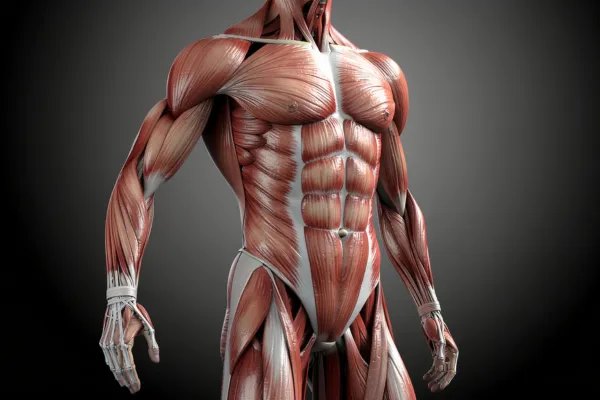
The core is better understood as a pressure management and force transfer system consisting of four main components working in concert. The diaphragm forms the top. The pelvic floor forms the bottom. The deep spinal muscles (primarily multifidus) form the back. The transverse abdominis forms the front and sides. Together, these muscles create a pressurized cylinder that stabilizes the spine against the forces of movement.
Surrounding this deep system are the intermediate layers: the obliques (internal and external), quadratus lumborum, and psoas, which provide both stability and mobility in three planes of motion. Outside these are the more superficial muscles, including the rectus abdominis, that contribute to gross movement and force generation.
Truly functional core training must address all these layers, in all three planes, through dynamic patterns. Floor-based crunches primarily stress the superficial rectus abdominis in a single plane. They largely ignore the deep stabilizers, neglect the obliques in their functional capacity, and completely miss the integrated pressure management function of the core system.
Muscle Activation Science During Walking
Research using electromyography (EMG)—a technology that measures electrical activity in muscles—has documented core muscle activation patterns during walking in extraordinary detail.
The transverse abdominis, one of the deepest core muscles and the primary stabilizer of the lumbar spine, activates before each foot strike to pre-stabilize the spine against the incoming ground reaction forces. This feedforward activation—anticipating rather than reacting to forces—is the signature of well-trained core stabilizers. It prevents the spine from being destabilized by the impact of each footfall.
The obliques activate in a crossed pattern during walking: the right external oblique and left internal oblique work together during right arm forward swing, while the left external oblique and right internal oblique engage during left arm forward swing. This cross-pattern activation is essential for controlling trunk rotation and coordinating upper and lower body movement.
The multifidus muscles—deep spinal extensors that are critical for vertebral segment stability—show consistent activation throughout the gait cycle, providing moment-to-moment spinal stability that prevents excessive movement at individual vertebral joints.
This complex, coordinated activation pattern cannot be replicated by any floor exercise. It's specific to upright locomotion because it's driven by the specific forces that locomotion creates. The transverse abdominis feedforward pattern, for example, is trained through the repetitive experience of anticipating footfall forces—an experience that only occurs during actual walking or running.
How Weighted Resistance Enhances Core Activation
Adding weighted resistance to walking—as Abdomen Balls™ does through the weighted balls at the end of the bar—amplifies core activation in scientifically predictable ways.
Newton's laws explain the basic mechanism. The weighted balls possess mass, which means they possess inertia. As you swing your arms during walking or running, the balls create momentum. When your arm reaches the end of its swing arc, the balls' momentum must be decelerated and redirected. This deceleration and redirection requires muscular force—specifically, the obliques and deep stabilizers must generate sufficient force to control the balls' movement.
The greater the balls' momentum (determined by their weight and your arm swing speed), the greater the muscular force required to control them. This is resistance training applied to the rotational plane—the plane that traditional core exercises largely ignore.
EMG research on loaded arm swing exercises shows substantially greater oblique activation compared to unloaded walking at equivalent speeds. The cross-pattern oblique activation that's already present during normal walking is amplified significantly when resistance is added to the arm swing. This amplified activation drives the training stimulus that produces core strength gains over time.
Specificity and Transfer
The principle of specificity is one of the most fundamental in exercise physiology: training adaptations are specific to the demands imposed. Your body adapts to precisely what you train, not to general categories of "core exercise."
When you train your core through upright, rotational, loaded walking and running movements with Abdomen Balls™, your core adapts to become better at upright, rotational, loaded walking and running movements. This adaptation transfers directly to daily activities because daily activities primarily involve upright movement in all three planes.
When you train your core through floor-based flexion exercises (crunches), your core adapts to become better at floor-based flexion. This adaptation has poor transfer to upright activities because the movement pattern, muscle activation sequences, and stabilization demands are entirely different.
Research comparing functional movement training with traditional isolation exercises consistently demonstrates superior transfer to real-world activities from the functional approach. This isn't controversial in exercise science—it's well-established principle.
Running and Core Activation
Running amplifies all the core activation patterns present during walking and adds several unique demands. Understanding these demands helps explain why running with Abdomen Balls™ is particularly valuable for core development.
Running introduces flight phase—periods when neither foot is in contact with the ground. During flight phase, the core must maintain postural integrity without the stabilizing input of ground contact. This requires more active muscular control than walking's continuous ground contact provides.
Ground reaction forces during running are 2-3 times body weight compared to approximately 1.2 times body weight during walking. The core stabilizers must be proportionally stronger and faster to manage these higher forces. Each footfall is a more significant challenge to spinal stability, requiring more robust core response.
The faster cadence of running—typically 160-180 steps per minute versus 100-120 for walking—means core stabilizers must work at higher frequency. This frequency demand trains not just strength but neuromuscular speed—the ability to activate stabilizer muscles quickly—which is crucial for reactive stability during technical terrain or unexpected destabilization.
Arm swing during running is more vigorous than during walking, creating greater momentum in any held device. Running with Abdomen Balls™ therefore produces proportionally greater core activation than walking with the same device, explaining why running integration represents a natural progression for users who begin with walking.
The Role of Proprioception
Proprioception—the body's sense of its own position, motion, and force—is closely integrated with core function. Core muscles are rich in proprioceptive receptors that provide continuous feedback about spinal position and movement. This feedback system allows your core to make automatic, real-time adjustments to maintain stability.
Training core muscles through dynamic, loaded movement with Abdomen Balls™ enhances proprioceptive function as well as strength. The challenging balance demands of managing weighted balls during walking and running require your proprioceptive system to be highly active, essentially training that system alongside the muscular system.
This proprioceptive enhancement has far-reaching benefits beyond the obvious balance and stability improvements. Enhanced proprioception reduces injury risk by improving your body's ability to detect and respond to destabilizing forces before they produce damage. It improves movement quality and efficiency across all physical activities. It supports healthier joint loading patterns that reduce long-term wear.
Endurance Versus Strength Training
An important physiological distinction separates the training effect of Abdomen Balls™ from traditional strength-focused core exercises. Heavy, low-repetition core exercises (weighted cable crunches, heavy medicine ball throws) primarily develop core strength—the maximum force your core muscles can produce. Abdomen Balls™ walking and running primarily develops core endurance—the ability to maintain core activation over extended time periods.
For most people's functional needs, core endurance is more important than peak core strength. You don't need your core to produce maximum force for a few seconds. You need it to provide adequate stability for hours of daily activity, during extended walks, throughout long runs, and across an entire workday of sitting and moving.
Core endurance training requires sustained activation at moderate intensity over time—exactly what Abdomen Balls™ provides during 20-60 minute walking and running sessions. This endurance-focused training builds the precise capability most people lack: the ability to maintain core stability as fatigue accumulates.
Neural Adaptations
Beyond the muscular adaptations, consistent Abdomen Balls™ use drives important neural adaptations that enhance core function. Neural adaptations—improvements in how your nervous system recruits and coordinates muscles—occur faster than structural muscle changes and account for much of the early strength and stability improvement most users notice.
The repeated experience of managing weighted resistance during locomotion teaches your nervous system to activate core stabilizers more efficiently. The feedforward activation patterns that protect your spine become more automatic and faster. The coordination between core layers improves. These neural improvements happen continuously with consistent practice, even after the muscles themselves have fully adapted.
Practical Implications of the Science
For users of Abdomen Balls™, the science translates to several practical insights.
Consistency matters more than intensity. The neural and endurance adaptations that make core training most valuable are driven by consistent, repeated exposure rather than occasional intense effort. Daily moderate use outperforms weekly intense use.
Natural movement is sufficient. You don't need to force exaggerated arm swings or create artificially large movements. Natural walking and running arm swing, with Abdomen Balls™ adding resistance, creates the training stimulus your core needs.
Progression is built in. Simply moving faster—from walking to jogging to running—naturally increases core activation without requiring any specific training adjustments. Your progression to higher intensities automatically increases the training stimulus.
Long-term practice produces cumulative adaptation. The neural and structural adaptations from consistent Abdomen Balls™ use accumulate over months and years. The core strength available to a dedicated two-year user is substantially greater than what six weeks of consistent use produces—and both are greater than inconsistent floor exercise ever achieves.
Conclusion
The science of core activation during locomotion reveals that walking and running with weighted resistance provides a biomechanically superior approach to core training compared to floor-based exercises. The specificity principle, the comprehensive muscle activation patterns of loaded locomotion, the proprioceptive benefits, and the endurance training effect all support Abdomen Balls™ as a scientifically grounded core training method.
This isn't just a convenient alternative to crunches. It's a better approach—grounded in exercise science, aligned with how your body actually functions, and designed to deliver the functional core strength that truly improves quality of life.
Experience the science-backed approach to core strength.